Asbestos closes Auckland’s main fire station
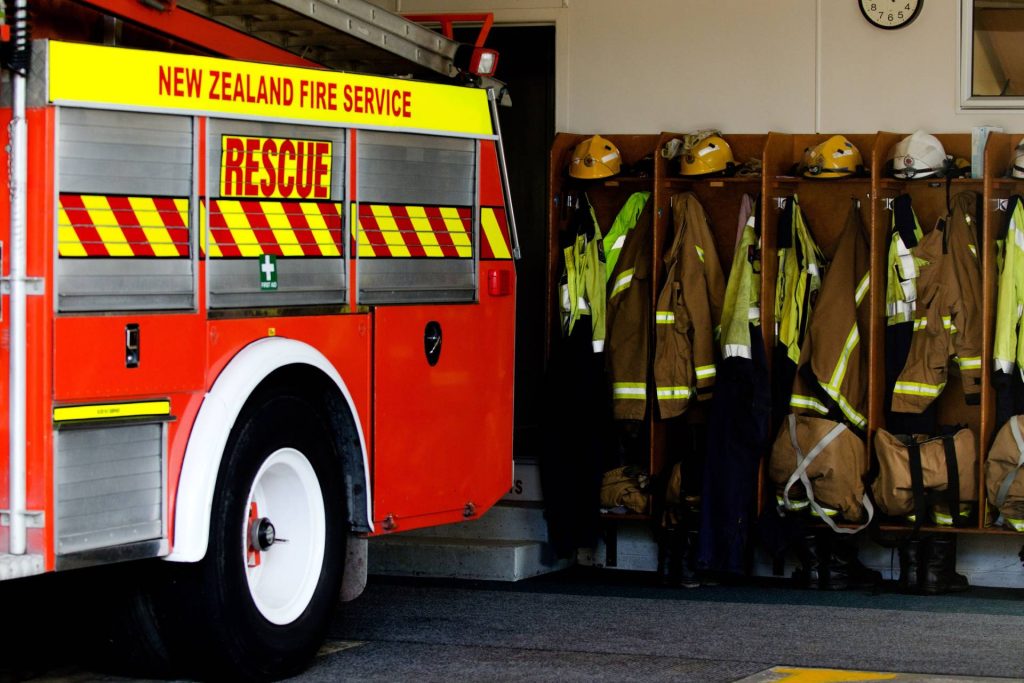
Auckland Central Fire Station was evacuated after asbestos was found in the building. Positive tests came back from an unused room at the Pitt Street station, a space that had been under monitoring since a removal effort in September 2024.
Staff and vehicles were unable to enter the station, and crews received precautionary decontamination. Fire appliances (three trucks and one van) were also taken out of service temporarily and subjected to deep cleaning. Air monitoring and swab testing around the station were also conducted.
Specialist fire trucks were therefore unavailable pending testing to confirm their asbestos-free status. FENZ Deputy National Commander Megan Stiffler later announced that all follow-up tests had returned negative for airborne asbestos fibres, allowing the station to reopen.
The New Zealand Professional Firefighters Union (NZPFU) vice president, Martin Campbell, said the discovery raises questions around Fire and Emergency policy and procedures. He questioned how Fire and Emergency New Zealand (FENZ) leaders could allow it to happen.
The union has demanded an independent inquiry into how exposure recurred in a building previously flagged as an asbestos hazard. NZPFU national secretary Wattie Watson criticised the pace of FENZ’s response and questioned whether FENZ had acted more on cost than the health risks to personnel.
“The NZPFU members and their families have no faith that FENZ has been acting in the interests of their health and safety, and decisions are being made solely on cost and not the risk of horrifying possible health outcomes such as asbestosis,” Watson said. “The union cannot see any respite from this risk without full removal/remediation of all asbestos from the site.”
It’s not the first time that asbestos has been found in the building. Two years ago, the station closed for tests and decontamination after asbestos was found in its roof. After weeks of renovations, dust had tracked through the first floor of the accommodation block of the fire station, leading to the discovery. The station was largely shut for about three weeks.
In 2023, WorkSafe had already flagged the FENZ asbestos management regime as deficient. Following earlier contamination at the same station, WorkSafe ordered a national review of asbestos management across approximately 300 fire stations. WorkSafe’s improvement notice accused FENZ of failing to implement and monitor asbestos controls effectively, even in known-risk areas of the Pitt Street station.
FENZ has defended its approach, saying sealed rooms with inaccessible asbestos had been encapsulated and isolated rather than removed, and that safety protocols were in place. It’s not uncommon for asbestos to be found in fire stations, as most were built between the 1940s and 1980s, when the cheap, strong, heat-resistant ingredient was widely used in New Zealand construction.
The decontamination process
Under New Zealand’s Health and Safety at Work (Asbestos) Regulations 2016, asbestos can only be removed or cleaned by licensed specialists following a strict, multi-stage process designed to minimise fibre release and long-term exposure risk.
Once asbestos contamination is suspected, the site is immediately isolated and sealed to prevent air circulation between affected and occupied areas. Only certified asbestos assessors and removal technicians are permitted to enter. They wear disposable coveralls and respirators and use negative-pressure enclosures to contain airborne fibres.
During clean-up, dry sweeping or standard vacuum use is prohibited. Instead, workers rely on wet wiping, misting, and HEPA-filter vacuums to suppress and collect asbestos dust. All debris is double-bagged in heavy-duty plastic, labelled as hazardous, and transported to an approved disposal facility.
After removal, the site undergoes air and surface testing by an independent assessor to ensure asbestos fibre levels fall below the legal threshold of 0.01 fibres per millilitre of air. This stage, known as a clearance inspection, is mandatory before any staff can re-enter the building.
Decontamination also extends beyond the physical structure. In cases such as the Auckland Central Fire Station, vehicles and firefighting gear are deep-cleaned to prevent cross-contamination. HEPA vacuuming and surface wiping are used inside appliance cabs, lockers, and hose compartments. Personal protective equipment and uniforms may be disposed of or laundered under controlled conditions.
Once clearance is achieved, the area can be reopened, though regular air monitoring is typically maintained for several months to ensure fibres do not reappear.
For older facilities where asbestos remains in walls, ceilings, or insulation, FENZ and other organisations often adopt a ‘manage in place’ strategy, encapsulating the material with a sealant rather than removing it entirely. While effective in the short term, experts warn this approach requires ongoing inspection, since disturbance or building movement can re-expose dangerous fibres — as seen again at Auckland’s central station.