Why AI is slow to reach the farm gate
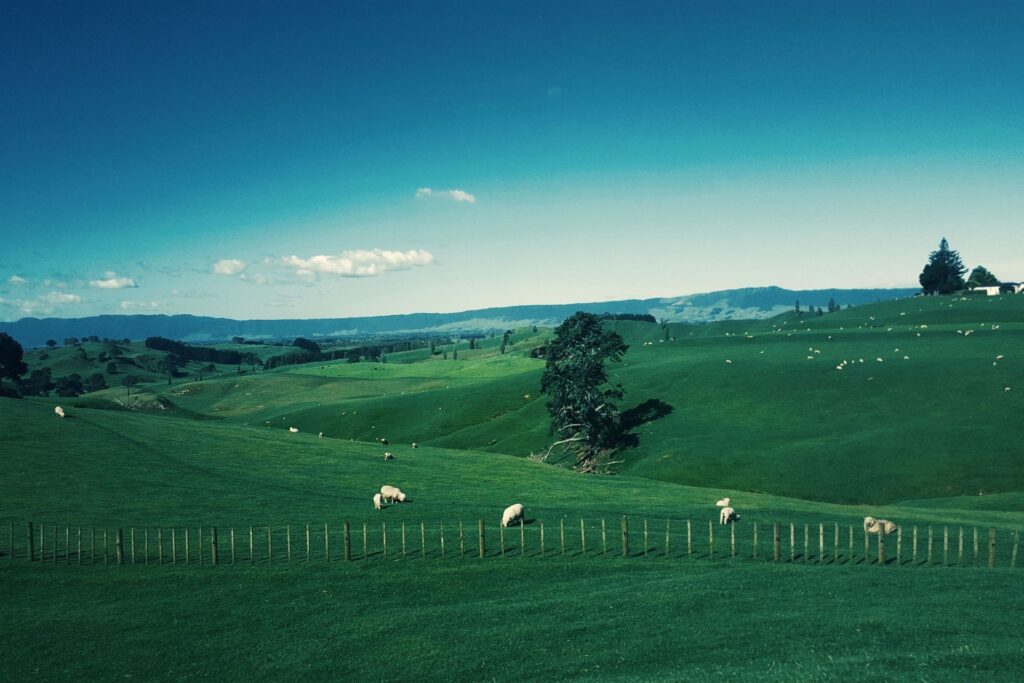
Some of the world’s best-funded farm tech is built here, yet Kiwi farmers are behind the rest of the economy in using AI. Patchy coverage, an ageing workforce and a shortage of skills all play a part.
New Zealand’s best-known agritech company runs on AI. Halter, which makes solar-powered GPS collars that let farmers fence and move cattle from a phone, raised US$220 million in March in a round led by Founders Fund, valuing it at US$2 billion.
On most farms, though, AI hasn’t arrived yet. Amazon Web Services research found AI adoption in agriculture, forestry and fishing at just under 40%, against 50% across all New Zealand businesses. Most farms using it are at the most basic stage.
“Only 10 percent have really moved to an advanced usage, and this is where you also really get most of the value out of it,” Manuel Bohnet, AWS’s New Zealand country manager, told RNZ. He named skills as the biggest barrier.
Coverage comes first
Much of the AI sold to farmers needs a signal. Collars, sensors and cloud-based pasture tools all assume a connection, and plenty of farms don’t have a reliable one.
Federated Farmers’ 2025 rural connectivity survey of more than 600 farmers found mobile coverage reached, on average, 57% of their farmland, unchanged since 2022.
Use of Starlink and other satellite services had nearly doubled to 36%, a sign farmers are paying to fix the gap themselves.
“Their mobile coverage is still patchy and unreliable, both on-farm and on provincial highways,” the federation’s telecommunications spokesperson Mark Hooper said.
An older workforce
Age plays a part too. Stats NZ’s 2023 Census counted 13,881 farmers aged 65 and over, up 66% in a decade, and more than in any younger 10-year age group.
An owner a few years from selling has less reason to learn a new system than one with 30 seasons ahead.
Australia shows a similar pattern. Its National AI Centre found in 2024 that agriculture had the lowest AI adoption of any industry among small and medium businesses, at 6%.
Where it’s working
The tools that are catching on solve a specific job. Aimer Farming’s AIMER Vision estimates pasture cover from a five-second phone video and works offline, which suits patchy coverage. MBIE’s AI strategy cites the company’s estimate that it saves three to four hours of labour a week.
Canterbury has a long record in water technology. Lincoln Agritech licensed a radar soil-moisture sensor for centre-pivot irrigators that cut water use by 25% in trials.
The University of Canterbury and the University of Waikato, with Ngāi Tahu and Waikato-Tainui, were shortlisted this year for a national AI research platform focused on the primary sector. “New Zealand offers a unique environment to develop and test new technologies in real-world agricultural settings,” said Waikato’s Professor Geoffrey Holmes.
The Government’s AI strategy, released in July 2025, favours adoption over development and names precision farming as an opportunity, but it carries no farm-specific funding or targets.