Auckland’s Bluestone Wall traced to Rangitoto
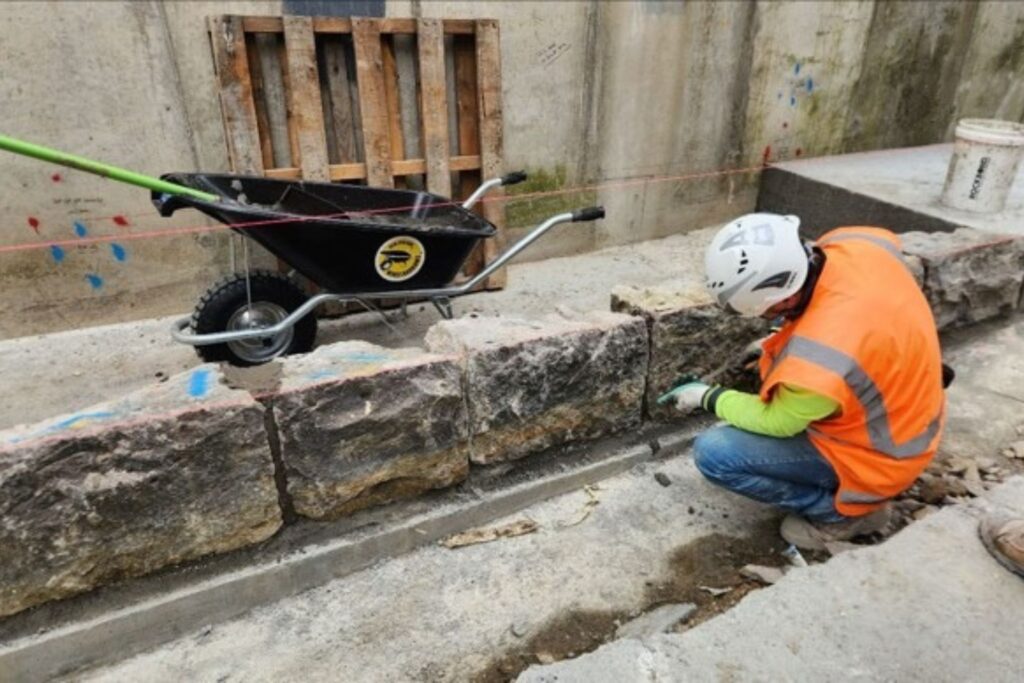
For decades, the common belief was that the basalt in Auckland’s Bluestone Wall on Albert Street came from Maungawhau (Mt Eden). Auckland Council says researchers have now traced the stone to a single quarry on Rangitoto Island.
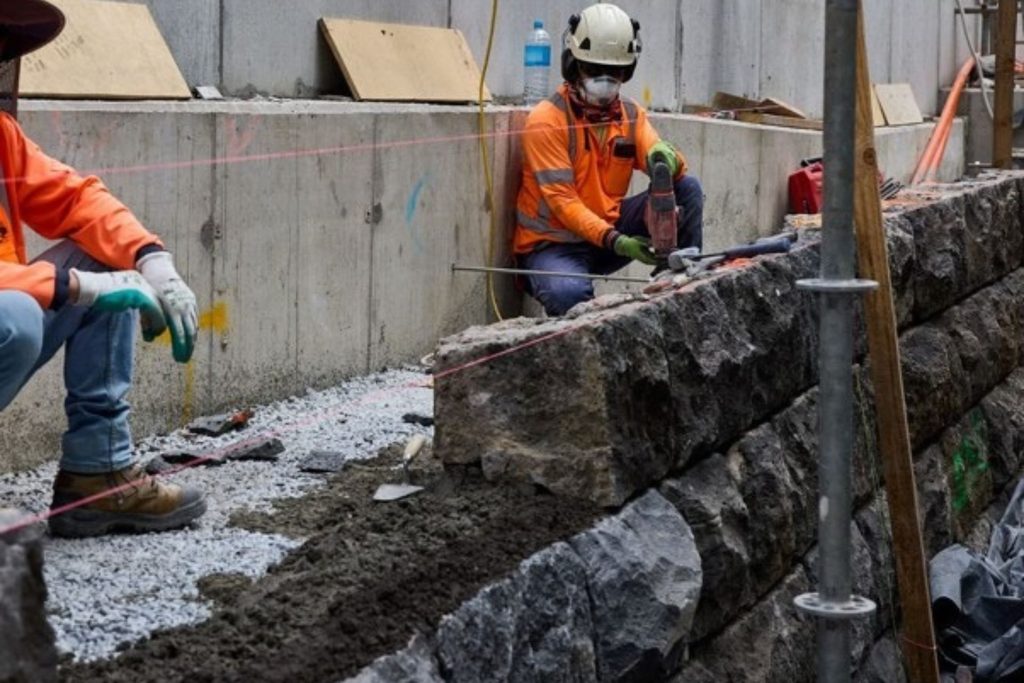
The answer came out of a big rebuild. The wall went up in 1881, and it was dismantled and reconstructed during the City Rail Link project. That gave scientists salvaged stone to test, and a chance to settle a question historians had chewed on for years.
A metre east, block by block
The council describes the wall as one of the city’s few surviving examples of late 19th-century roading infrastructure. It couldn’t go back exactly where it stood. The scale of the City Rail Link tunnel and Te Waihorotiu Station meant it had to move one metre further east, towards Queen Street.
Around 1,800 blocks were reinstated block by block, each returned to its exact position in the original wall. The old entrance to a public toilet in the wall, closed decades ago, is now maintenance access for the City Rail Link.
Heritage architect Jane Matthews was involved with the wall’s deconstruction and reconstruction. She says the finding answers a question that came up during that job, which was where the stone came from.
Desley Simpson, Deputy Mayor of Auckland, says the council puts a lot of value on preserving heritage in public spaces. “We live in a rapidly changing world and being able to preserve this historic Bluestone Wall gives us a tangible connection to the past and our unique environment,” she says.
A chemical fingerprint
Geochemists from DEVORA (DEtermining VOlcanic Risk in Auckland), a research programme that studies volcanic hazard and risk in the city, did the testing. It’s co-led by the University of Auckland and Earth Sciences New Zealand, which formed in July 2025 when GNS Science and NIWA merged. Auckland Council, the Natural Hazards Commission
Toka Tū Ake and a Learned Australasian Volcanology Association (LAVA NZ) grant helped fund the work.
The team analysed the rocks’ chemical fingerprints and compared them with an extensive database of material from the Auckland volcanic field.
Dr Elaine Smid is a geochemist at the University of Auckland’s School of Environment and part of DEVORA’s management team.
“The moment we saw the data was very exciting,” Smid says. “It was immediately clear that the lava used to build the Bluestone Wall was very likely from Rangitoto Volcano. It has such a distinct geochemical signature.”
Smid’s own wording is “very likely”. The council’s account goes a step further and calls Rangitoto confirmed.
The paper trail points the same way. Historian Lisa Truttman uncovered records showing the original contractor, Daniel Fallon, had sourced stone from Rangitoto around the time the wall was built.
“It is really exciting for this to be confirmed by geochemical analysis,” Truttman says. “It is uncommon to have absolute confirmation of where bluestone used in 19th-century Auckland construction originated.”