AA questions cost of Northland speed limit flip-flops
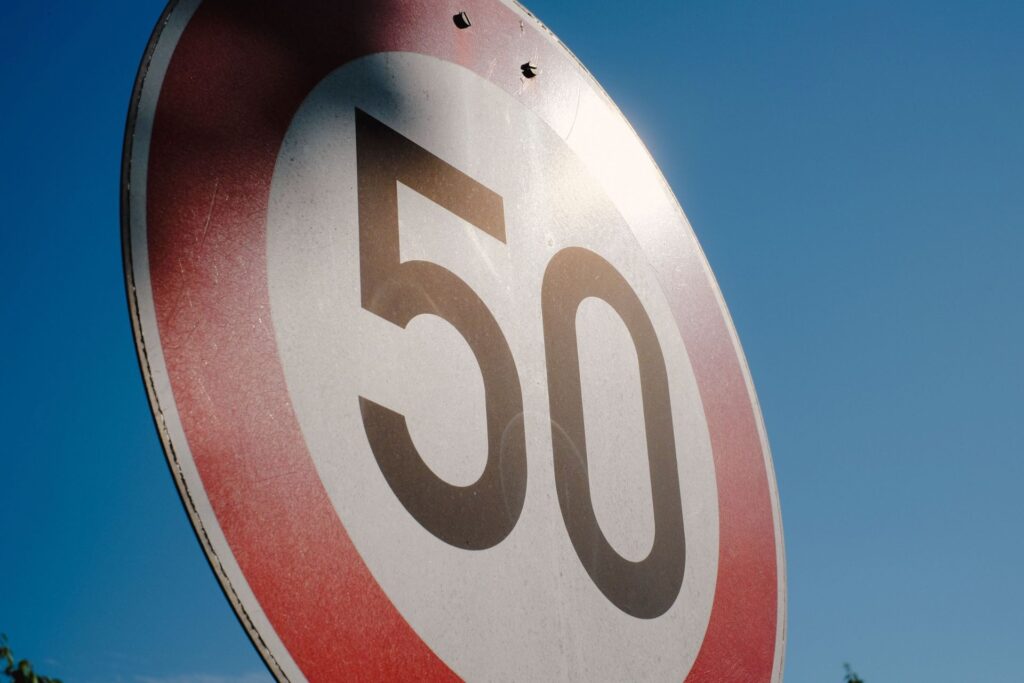
The speed limit on State Highway 1 between Moerewa and Kawakawa went up from 80km/h to 100km/h in 2025. In October 2026 it went back to 80km/h, and both times a crew had to swap the signs.
The Automobile Association’s Northland branch says the back-and-forth is confusing and costly. Tracey Rissetto, chair of the AA’s Northland District Council, told RNZ that changing the limit again on a short section of SH1 will confuse motorists. She said the cost of consulting and physically changing signs comes out of a transport budget that’s already under stress.
Her branch backed the return to 80km/h on that stretch because of the crash risk at Kawakawa’s narrow Three Bridges. What it wants is consistency. “Speed limits are an issue of safety and should not be by political whim,” Rissetto said.
Five Northland sections come back down
NZ Transport Agency Waka Kotahi (NZTA) lowered the limits at five Northland state highway locations in October 2026, after a speed review and public consultation. SH1 Moerewa to Kawakawa and two sections of SH10 at Kaingaroa went from 100km/h to 80km/h. On SH12 at Ōpononi, one section dropped from 100km/h to 60km/h and another from 70km/h to 50km/h.
The SH1 and SH10 sections were among the roads lifted from 80km/h to 100km/h in 2025 under the Setting of Speed Limits Rule 2024. The Director of Land Transport approved the new limits under the same rule, and NZTA says each one became enforceable once its new signs were installed and uncovered.
Jason Dawson, NZTA’s director of regional relationships for Auckland and Northland, said the agency received more than 1,500 submissions across the five locations. He said the safety evidence and technical assessment confirmed lower limits were the right call there. Because the sections are short, Dawson said, they shouldn’t add significantly to travel times.
The sign bill lands on road budgets
The 2024 rule required NZTA and councils to reverse speed limits lowered since January 2020 on several categories of road by 1 July 2025. In January 2025 Chris Bishop, as Transport Minister, announced that 38 state highway sections would reverse automatically and 49 more would go to consultation. NZTA later confirmed 43 of those 49 would return to their previous higher limits and six would keep their lower ones.
Bishop said NZTA would fold the reversal work in with planned maintenance and project works to keep it efficient. NZTA’s interim guidance to councils required new signs and road markings to be in place by the deadline, and said there would be no centralised procurement of signs.
Councils carried their share of the job. An Auckland Transport board paper from October 2024 put early draft estimates at $7.5m for removing signs, road markings and coloured surfacing on reversed roads. It estimated a further $16.7m for signs and markings for variable speed limits outside school gates, and noted that funding for the reversals wasn’t provided when the rule was signed.
The school work is the other half. The rule requires variable limits outside schools at pick-up and drop-off times, 30km/h on urban local streets and 60km/h or less on rural roads, with a 1 July 2026 deadline. Wellington City Council says it’s installing signs in phases until November 2026, with static signs on local roads and electronic ones on busier collector and arterial roads.
The next round depends on the vote
Parties set out their speed positions in answers to Living Streets Aotearoa, published in September 2026. National said it reversed Labour’s blanket reductions because they didn’t take into account economic impacts, including travel times, and that safe road infrastructure should be enabling higher speed limits. Bishop’s January 2025 release said reversing reductions where safe is part of the National-ACT coalition agreement.
Labour said a Labour government would restore an evidence-based speed management framework that lets councils set safe speeds where the case supports it. It also said it would review school speed settings against the road safety evidence.
The Green Party said it has advocated for safe speeds in urban areas and near schools and kura, and to reverse the Government’s changes. The Opportunity Party said it would overturn recent ministerial directives that forced councils to raise speed limits around schools and urban centres. ACT and NZ First didn’t respond to the questions.
For now, the 2024 rule sets the process. Road controlling authorities proposing a change must include a cost-benefit disclosure statement in their consultation material, and it has to cover implementation costs. For crews who put up and take down the signs, that statement shows what a change is expected to cost before any work goes ahead.