HERA maps a practical pathway to net-zero emissions for New Zealand’s steel industry
Aotearoa New Zealand has committed to net-zero greenhouse gas emissions by 2050. HERA is helping the steel and construction sectors understand what that transition requires and, importantly, how industry can begin reducing emissions now.
Steel remains essential to New Zealand’s buildings, infrastructure and renewable energy assets. Its strength, durability and adaptability make it central to a resilient built environment.
The challenge is to retain these benefits while reducing emissions across steel production, design, construction, use and end-of-life recovery.
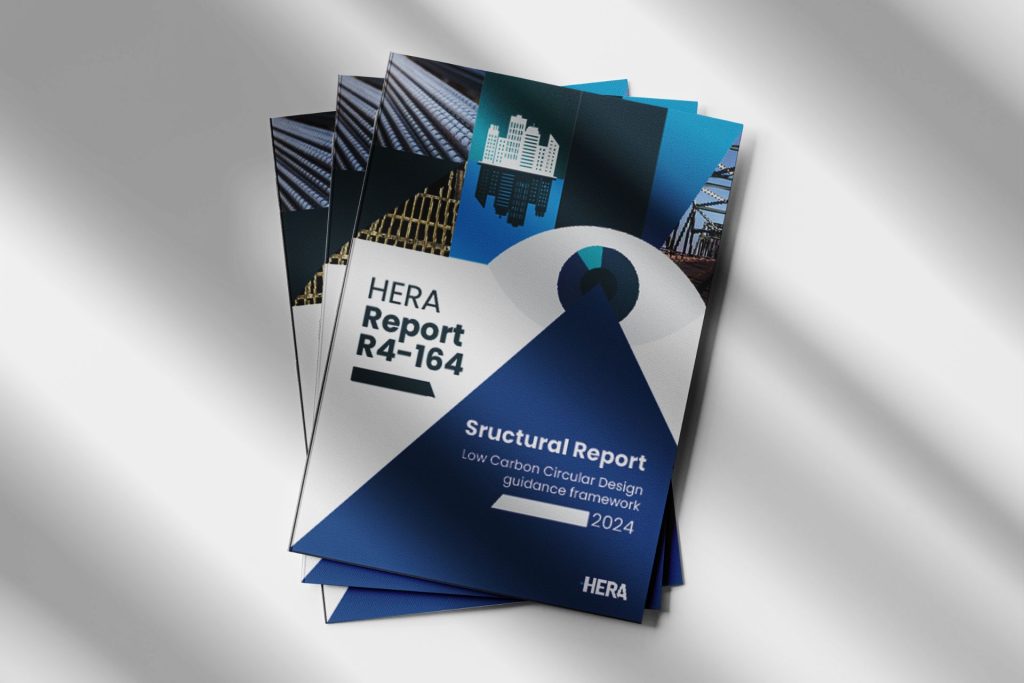
HERA’s latest research provides a practical pathway forward. Developed by HERA researchers Dr Kaveh Andisheh, Amir ShahMohammadi and Dr Troy Coyle, the Low-Carbon Circular Design Framework brings lower-carbon material specification, efficient design and circular economy principles together within one approach.
The framework was tested through a case study of a three-storey commercial building in Christchurch. Applying practical strategies reduced its carbon footprint by 57%.
Lower-carbon concrete, structural steel and reinforcing steel delivered 46 percentage points of that reduction, showing the critical contribution of lower-carbon material production and specification. Design efficiency and circular strategies provided further reductions.
This combined approach matters. Decarbonising steel production remains central to achieving net zero.
HERA’s framework shows how industry can extend those gains through decisions made during planning and design, when there is greater potential to reduce carbon at a lower cost.
At the heart of HERA’s framework is a hierarchy that helps project teams identify the most effective available options. It considers retaining and repurposing existing buildings, designing new structures for longevity and adaptability, using materials efficiently, specifying lower-carbon products, and planning for future disassembly and reuse.
HERA’s work extends beyond research. Through industry guidance, technical publications and collaboration with steel producers, designers and contractors, HERA is helping organisations understand where emissions occur and how practical interventions can deliver measurable reductions across projects and supply chains.
HERA is also developing resources to turn research into action. Its updated How to specify low-carbon structural steel guide establishes carbon benchmarks for different steelmaking routes and provides specification targets, example clauses, and evidence requirements.
This helps engineers, architects, contractors, and clients make verifiable material decisions without compromising structural performance.
Digital technologies will strengthen this work. HERA’s framework identifies building information modelling, digital twins, material passports and structural health monitoring as tools that can improve traceability, support maintenance, and make future steel reuse more practical.
As New Zealand’s metals-based research association, HERA continues to develop the evidence, tools and technical guidance needed to support the transition. From lower-carbon steel specification and circularity research to whole-of-life design methodologies, HERA is working alongside industry to turn net-zero ambitions into practical outcomes across Aotearoa New Zealand’s wider built environment sector.