Wellington city shrinks as Canterbury keeps growing
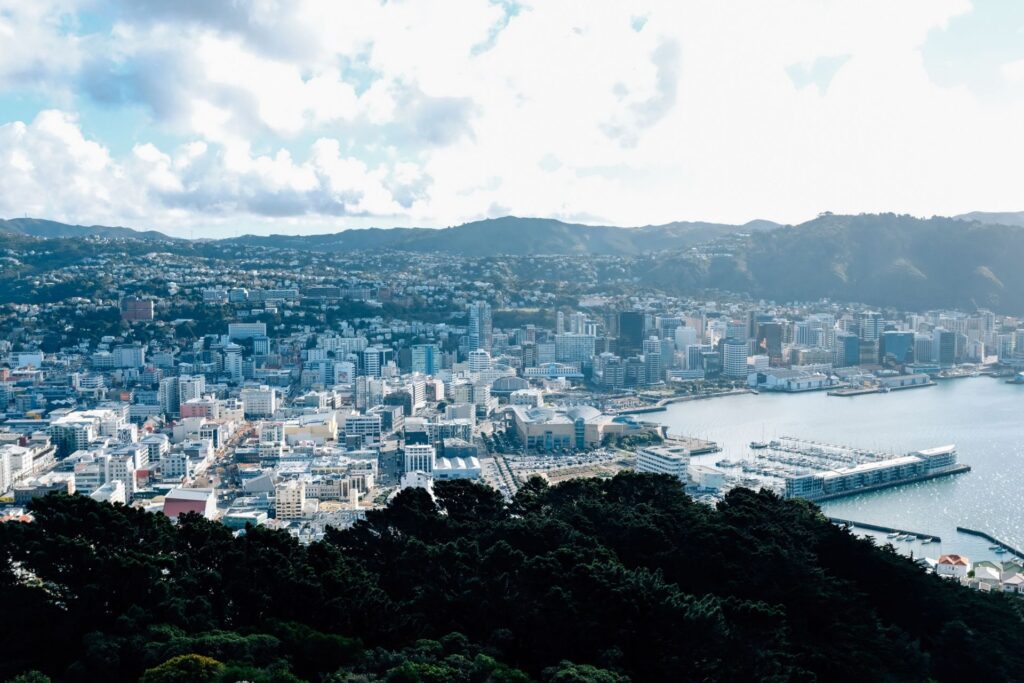
Christchurch gained about 3,700 residents in the year to June 2026, while Wellington city lost about 1,200. Stats NZ’s provisional estimates put Christchurch at 422,400 people and Wellington city at 208,300.
But Christchurch’s second place isn’t new. The 2001 census already had it second among New Zealand’s cities and districts, with 316,227 residents, behind the old Auckland City and ahead of Manukau.
Stats NZ’s back-dated estimates start in 1996 and show Christchurch ahead from the first year. As urban areas it was 315,800 to Wellington’s 162,700, and as regions Canterbury led Wellington 480,400 to 426,900.
The closest measure is the functional urban area, which adds the commuting zone around a city. Christchurch led that one 371,300 to 353,400 in 1996, and by June 2025 the gap was 556,500 to 441,200.
City boundaries flatter either side. Add Lower Hutt, Porirua and Upper Hutt to Wellington city and you get 432,000, more than Christchurch city alone. Add Selwyn and Waimakariri to Christchurch and you get 584,100.
Who moved
Wellington city had 640 more births than deaths in the June 2026 year. That couldn’t cover a net loss of 600 people to other parts of New Zealand and 1,300 overseas, the largest net international loss of any territorial authority or Auckland local board.
Christchurch had natural increase of 940, a net gain of 1,500 from elsewhere in New Zealand and 1,300 from overseas. Wellington city has now fallen two years running, from 211,000 in 2024. It’s in company, too, with six of New Zealand’s 13 cities shrinking, including Dunedin.
Some of the capital’s neighbours grew. Lower Hutt was up 0.7% and Upper Hutt 0.5%, and by our tally the eight councils wholly inside the Wellington region lost only about 190 people between them.
The nine districts wholly inside Canterbury added about 7,400. About 7,000 of those were in Christchurch, Waimakariri and Selwyn, which was the country’s fastest-growing area, up 2.9% to 90,800. Timaru and Kaikōura each fell 0.5%.
The age mix moved as well. Wellington city’s 15 to 39 age group fell from 90,220 to 87,340 in two years. Christchurch’s rose from 154,940 to 156,540, though its over-65s grew faster, up 4,040 to 71,380.
What’s behind it
Stats NZ counts the moves and gives no reasons, so the explanations come from others. Nick Brunsdon, principal economist at Infometrics, looked at 2023 census data and found the Wellington region had a net gain of 4,800 people aged 15 to 29 from elsewhere in New Zealand over the five years to 2023, and a net loss of 7,900 aged 30 to 64.
He read that as people arriving, likely for study, then leaving after study or a first job. The average person leaving Wellington was 34, he found, close to the average age of people arriving in Porirua, Lower Hutt and Upper Hutt. Greater Wellington Regional Council’s 2024 census notes recorded no growth in Wellington city between 2018 and 2023, and asked whether housing costs there were a push factor.
Public service cuts come up often, though economists have tied them to Wellington’s economy, and we found none tying them to these population figures. Public Service Commission data shows national staffing peaked at 65,699 full-time equivalents in December 2023 and fell to 62,654 by June 2025, then rose 2.0% to 63,912 by June 2026. The Wellington region’s share of that workforce has slipped to 41.2%, from 44.9% in 2021.
Bigger cuts are planned. Finance Minister Nicola Willis set a target in May of no more than 55,000 by July 2029, said it was too soon to say where cuts would fall, and said Wellington and other centres would have time to adjust. Duane Leo, national secretary of the Public Service Association, opposes the plan and says the impact would be felt across the country.
Brunsdon applied the same 14% cut across regions. He estimated about 3,700 job losses in Wellington, or 1.3% of all jobs there, and 909 in Canterbury, or 0.3%.
Brad Olsen, chief executive of Infometrics, told RNZ in May that “all this talk of Wellington’s demise seems to be quite overblown”, while saying the city will have to change. Wellington City Council’s commissioned Sense Partners projection still has the city adding about 44,800 people between 2024 and 2054.
Jobs and house values
ChristchurchNZ, the city’s economic development agency, reports Stats NZ figures showing Canterbury’s unemployment rate at 3.6% in June 2026, equal lowest with Otago. The Wellington region was at 4.9% and the country at 5.4%, all unadjusted. Canterbury had 14% of national employment and 30% of the year’s employment growth.
Home values went in opposite directions too. Cotality had Christchurch up 0.2% in September 2026 and Wellington down 0.7%, the steepest fall among the main centres. Its chief property economist, Kelvin Davidson, says tight public spending has dampened other Wellington sectors, while values there have still averaged annual gains of 4% to 5% in many parts of the wider region over the longer term.
Selwyn’s growth leans on its neighbour. Brunsdon found 48% of people moving into the district came from Christchurch, and said a stall in Christchurch would likely have a knock-on effect there.
These numbers will shift. Stats NZ first put Wellington city’s June 2025 fall at 0.3%