When is hydrodemolition necessary?
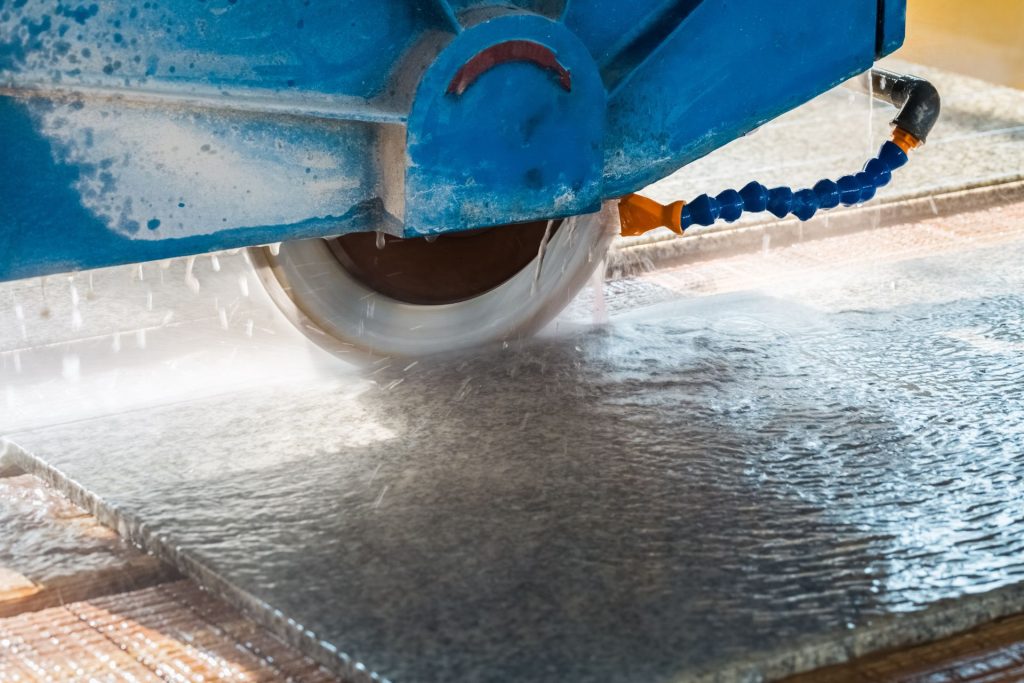
Hydrodemolition takes concrete out with a high-pressure water jet instead of a hammer. It’s rarely the only way to do that. It becomes the necessary way when what has to survive the removal matters more than what has to come out.
That’s the test worth applying before it goes into a tender. The operator sets working pressure and traverse speed against the concrete strength and condition, and the jet removes weaker material while leaving stronger concrete behind.
Weak, delaminated or chloride-contaminated concrete goes. Sound concrete can stay. Reinforcing steel stays in place and can be exposed and cleaned by the same pass, which is why the method gets specified on repair work where the existing bar has to survive.
So, the case for it is strongest where the damage is patchy and the boundary between good and bad concrete is irregular. A bridge deck, a wharf beam, a tank wall.
A breaker operator working the same area has to judge where to stop, and every over-break is concrete that has to be poured back. Removal rate is the number that ends up in the tender, and it moves with concrete strength, aggregate type and the depth being taken out.
The comparison with jackhammering usually gets argued on productivity. The stronger case is exposure.
WorkSafe’s guidance notes that respirable crystalline silica dust is created whenever concrete is cut, ground, drilled or otherwise disturbed, and that silicosis is progressive, permanent and can keep developing after exposure has stopped.
New Zealand’s workplace exposure standard for crystalline silica is an eight-hour time-weighted average of 0.025mg per cubic metre, adopted in 2023, and WorkSafe carries a Category 1 carcinogen notation against it, meaning a known or presumed human carcinogen.
Using water instead of dry mechanical removal cuts airborne dust at the point of work. Running the job from a remote-controlled rig can also remove the operator from direct hand-arm vibration exposure that comes from a day on a breaker. Neither necessarily changes the programme, but both change the way the health risk has to be controlled and managed.
The bond surface is the other gain. A jetted face is rough and clean, which can provide a good key for a repair pour.
The constraints are set-up and water. The rig needs a reliable supply, pump space and time to establish, so the economics favour a decent quantity of removal in one place rather than scattered patches.
Noise is high. And the slurry running off carries concrete fines and needs containing and managing before it reaches a stormwater drain. Where nothing in the structure has to survive, none of that cost is buying anything a breaker or a crusher would not deliver.
WorkSafe issued a safety alert on 20 August reminding businesses to establish whether asbestos-containing material may be present before carrying out high-pressure water spraying or using compressed air.
The alert followed a series of notifications about waterblasting on roofs that contained asbestos. In the most recent case, work was done on a 1970s residential property with decramastic roof tiles.
Debris was later found across the property and inside the house, testing confirmed the tiles contained chrysotile asbestos, and specialist assessment found remediation was needed to deal with the contamination indoors and out.
High-pressure water spraying and compressed air must not be used on asbestos or asbestos-containing material under the Health and Safety at Work (Asbestos) Regulations 2016, outside the limited exceptions the regulations set out.
WorkSafe’s advice is to treat buildings built before 1 January 2000 as potentially containing asbestos, assess the risk before any work that could disturb roofing or cladding, and stop immediately and get specialist advice if material is found once work has started.
That check carries more weight from 1 April 2027. The amendments to the Health and Safety at Work Act introduce a critical-risk framework requiring businesses to identify and prioritise risks that could result in death or serious harm.
On an older structure, the first question isn’t whether hydrodemolition is necessary, it’s whether asbestos or asbestos-containing material could be disturbed by the work.