Who pays for the Cove?
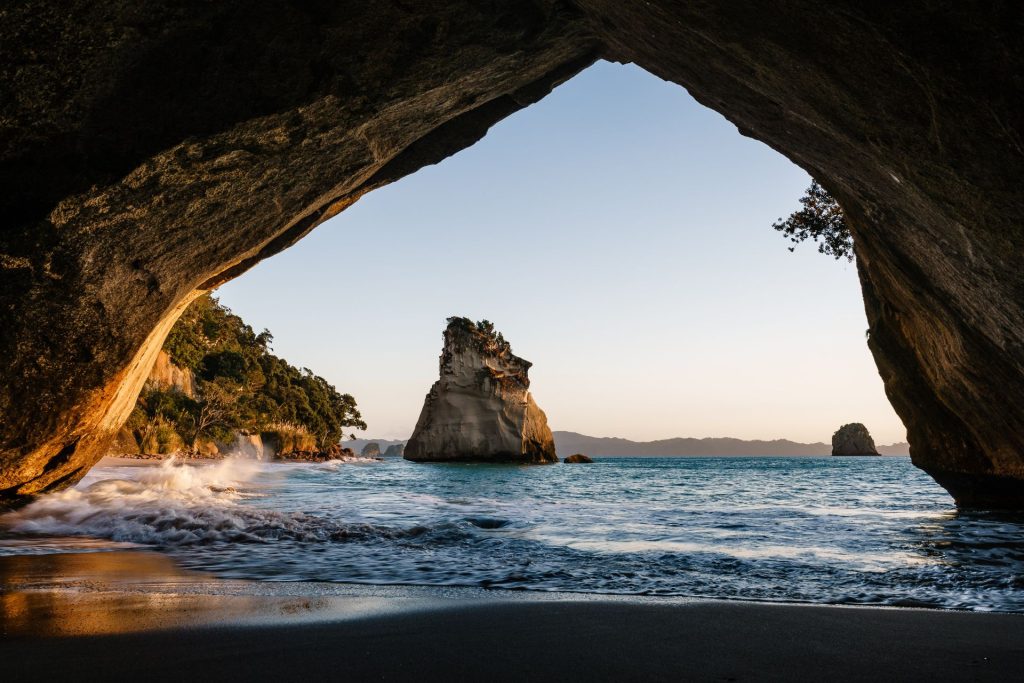
Walk down the steep track at Hahei on a summer morning and you reach one of the most photographed places in the country: Mautohe Cathedral Cove, where a great arched cavern opens between two beaches and the Pacific glitters through the far side. For as long as anyone can remember it has been free to anyone who walks in. That is now the question hanging over the Coromandel is who should pay to keep it standing.
The proposal comes from central government. Under the Conservation Amendment Bill introduced by Conservation Minister Tama Potaka, the Department of Conservation would gain power to charge international visitors at the country’s busiest attractions. Cathedral Cove is on the shortlist alongside Piopiotahi Milford Sound, Aoraki Mount Cook and the Tongariro Alpine Crossing, places where overseas visitors make up around 80% of foot traffic. The mooted fee runs $20 to $50, with the cove in the $20 to $40 range. New Zealanders would not be charged. The scheme could raise tens of millions a year, ringfenced for the tracks, toilets and huts, with the first charges targeted for 2027.
For the Kiwi reader the headline is reassuring: the cove stays free for you. More interesting is what the people who live nearest make of it, and their answer is not a flat no. A survey by the Hahei Residents and Ratepayers Association found 72% of respondents supported charging international visitors. The argument is not about whether to charge, but how. At a packed community hall, the heat was in the detail. Councillor Flemming Rasmussen supports a charge, noting overseas visitors are often “shocked” entry is free, but wants the money to stay local, not vanish into DOC’s vast national estate.
Behind the debate sits a sobering fact: the cove is not the durable postcard it appears. Around 200,000 people visit each year, and the land keeps moving. Storms in 2023 closed the tracks for nearly two years, and a fresh slip in early 2026 undid some repairs. Every reopening now happens in careful consultation with Ngāti Hei, the iwi with mana whenua over Te Whanganui-A-Hei. Back in 2023, kaumātua Joe Davis spoke of visitors ignoring a rāhui: “They think it’s open slather… and get that selfie shot.”
Almost everyone agrees the days of a free ride are numbered. What is still being worked out is the part that matters most to locals: whether the money will follow the wear, who holds the gate, and whether a place can be both properly protected and genuinely open. For the rest of us, the reassurance is simple. Next time you make the walk down, the only thing it should cost is the effort of climbing back up.