Do fines still matter when a property is worth millions?
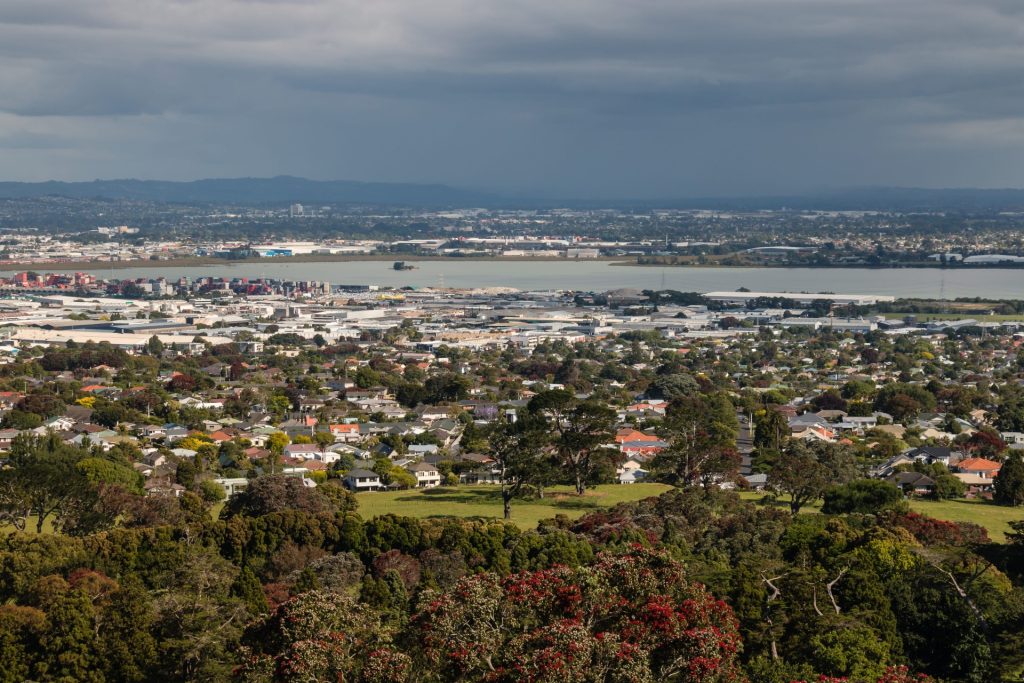
A recent Auckland case involving a Takapuna beachfront property owner fined for illegally trimming protected pōhutukawa trees has reignited a long-running debate in New Zealand planning law: when environmental rules are breached in high-value property markets, do fixed penalties actually deter the behaviour they are meant to stop?
In the case, the owner of a property reported to be valued at around $15 million was fined approximately $21,000 after carrying out unauthorised trimming of protected coastal trees to improve a sea view.
The pōhutukawa were subject to council protections, meaning significant work required resource consent under Auckland Council rules.
The trimming was found to have gone beyond what was permitted, causing damage to the trees and breaching environmental controls designed to protect coastal character and ecological health.
While the fine reflects a legal consequence, critics argue it is relatively small when compared with the scale of the asset involved and the potential increase in amenity value from an improved view.
However, this case is part of a broader and well-established pattern across Auckland and other parts of New Zealand, where coastal vegetation and protected trees frequently become the focus of enforcement action.
In Auckland, particularly on the North Shore and eastern suburbs, there have been multiple prosecutions over the past decade involving unauthorised removal or heavy pruning of notable pōhutukawa. In earlier Auckland enforcement cases, property owners were fined more than $50,000 after mature coastal trees were illegally removed.
The court treated the offending seriously because the trees were considered irreplaceable in ecological and landscape terms, meaning the damage was permanent rather than reversible through replanting.
In another enforcement case involving coastal land development, penalties and associated costs exceeded $100,000 after native vegetation was cleared without consent. The council’s concern in that instance extended beyond aesthetics to include increased erosion risk, loss of biodiversity, and destabilisation of coastal landforms.
Similar outcomes have been recorded in regional New Zealand. Councils in areas such as Northland and the Bay of Plenty have pursued enforcement action against landowners who cleared indigenous bush or protected trees without approval.
Where offending is deliberate or linked to development gain, fines have escalated significantly, and courts have sometimes imposed additional orders requiring offenders to fund ecological restoration or replanting programmes. These reparation requirements can, in practice, exceed the monetary fine itself.
Across all of these cases, courts consider a consistent set of factors when determining penalties: whether the act was deliberate or accidental, the ecological significance of the vegetation removed, whether the damage is reversible, whether the offending resulted in financial benefit, and whether there was any attempt to comply with consent requirements.
Where actions appear motivated by improving property value or lifestyle outcomes, such as enhancing coastal views, penalties tend to be viewed more seriously.
This is where the policy debate becomes more complex. Critics of the current system argue that fixed fines can lose deterrent value in high-wealth property contexts. In coastal real estate markets where properties are worth millions, even substantial fines may be treated as a manageable cost relative to potential gains in property value or desirability.
This has led to ongoing discussion about whether penalties should be scaled more proportionately to wealth or asset value, rather than remaining largely fixed or offence-based.
International comparisons are often raised in this debate. Some jurisdictions, particularly in parts of Europe, use income-based or earnings-adjusted fines for certain categories of offences to ensure proportional deterrence. Finland, for example, applies income-linked penalties in traffic offences.
New Zealand, by contrast, generally relies on judicial discretion under the Resource Management Act, where fines are set based on seriousness, intent, and environmental impact rather than the offender’s financial capacity.
The discussion is sometimes extended, in public commentary, to global billionaires as symbolic examples of extreme wealth. Figures such as Jeff Bezos are occasionally referenced in this context, not because there is evidence of routine or recurring fines against him, but because they are used rhetorically to illustrate how fixed penalties can feel negligible relative to vast personal wealth.
In reality, there is no verified pattern of Bezos paying ongoing or monthly fines related to property or environmental breaches; rather, he is used in broader debates about wealth disparity and regulatory effectiveness.
Cases like the Takapuna pōhutukawa dispute sit at the intersection of private property rights, environmental protection, and economic inequality. Protected trees and coastal vegetation are regulated not only for visual amenity but because they form part of wider ecological and coastal stability systems. The legal framework is therefore designed to limit individual actions that have collective environmental consequences.
The ongoing question raised by these cases is not whether laws exist, they clearly do, but whether the consequences are consistently strong and proportionate enough to deter behaviour in environments where financial incentives to modify land are high and where fixed penalties may not fully reflect the economic realities of extreme wealth.