Canterbury gets first rubber road
The nation’s first rubber road has been laid in Selwyn. The installation on Glentunnel Domain Road uses recycled rubber crumb made locally by Treadlite NZ in partnership with HEB Construction.
The local council is trialling three different rubber surfaces in this location. Options include a rubber surface laid over a conventional aggregate base, a rubber-modified asphalt created by Isaac Construction, and a fully rubberised surface and base layer bonded with a rubber-enhanced agent.
Although each of these products has been applied separately elsewhere in New Zealand, this marks the first time they are being combined to create a complete road surface.
The Council will closely track how all three sections perform. If the trial proves successful, rubberised surfacing could be expanded across the district, delivering stronger roads, reduced long-term costs, and innovative local recycling in Selwyn.
Mayor Lydia Gliddon says Selwyn is “determined to not just be building more infrastructure but building better, smarter infrastructure”.
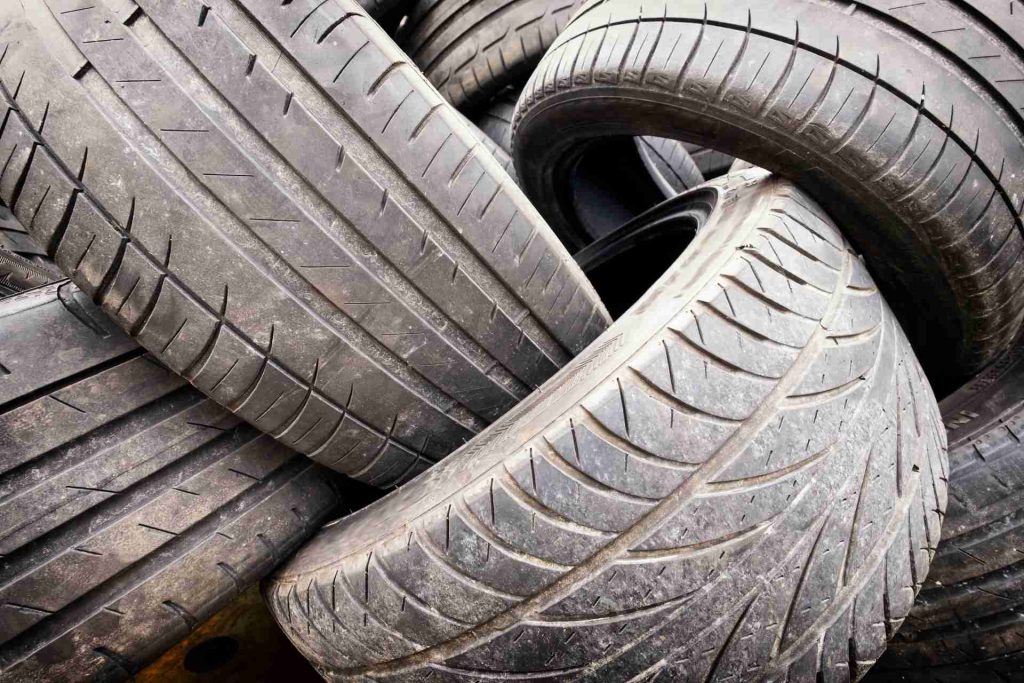
Each year, over six million tyres reach the end of their life in New Zealand, while nearly 180,000 tonnes of mostly imported bitumen are used for road construction. Replacing just 15% with rubber would use half the tyres that reach their end of life annually.
The product serves as an alternative to traditional gravel and bitumen, cutting dependence on imported materials while repurposing tyres that might otherwise end up in landfills or stockpiles.
“This is about designing roads that last longer, cost less to maintain, and support local recycling and Kiwi‑made solutions” says Council Executive Director Infrastructure & Property Tim Mason.
“Rubber road technology is used increasingly around the world, and this trial gives us the opportunity to test how it performs in Selwyn conditions.”
Since the 1970s, tyre-derived crumb rubber has been used internationally as an alternative additive to bituminous binders, improving pavement performance while also helping to manage end-of-life tyre waste.
The NZTA says early trials in hot mix asphalt (HMA) and chip seal pavements produced mixed results, but advances in technology, ongoing research, and global best practices have shown that crumb rubber can be successfully incorporated into road surfaces.
In New Zealand, the use of rubber in roads has historically been limited to natural rubber latex or SBS block copolymer, also introduced in the 1970s.
Crumb rubber from waste tyres, however, has largely been confined to research trials and has not yet been widely applied in standard road construction or maintenance projects.
If successful, Selwyn’s rubber road could pave the way for longer-lasting, quieter, and more sustainable roads across New Zealand.