When to stop DIY and hire a professional
It’s satisfying to stand back from a finished job knowing you did it yourself. It might be a rebuilt deck, a repainted fence or a tiled splashback that turned out better than expected. New Zealanders have built something of a national identity around this instinct. Give it a go, work it out, save the call-out fee. Often that approach makes complete sense.
But sometimes you have to be the pay-someone-else-to-do-it type. Sometimes confidence and enthusiasm stop being enough. The tools change, the risks change and the margin for error narrows. A moment comes when doing it yourself stops being a virtue and starts being a gamble. It’s worth asking yourself whether the job in front of you has crossed that line.
The numbers give that instinct some backing. ACC accepted 22,773 DIY-related injury claims in 2024, costing $41 million to help people recover. DIY sits deep in New Zealand life, but ACC’s own advice is to slow down and stop to assess the risks.
There’s also a clear pattern in the kinds of things that go wrong. ACC’s figures for 2024 show that falls or loss of balance accounted for around 42% of home-related injuries, while lifting, carrying and straining accounted for about 16%. DIY is only one part of that wider picture, which also includes gardening, ladders, steps, animals and other activities around the home.
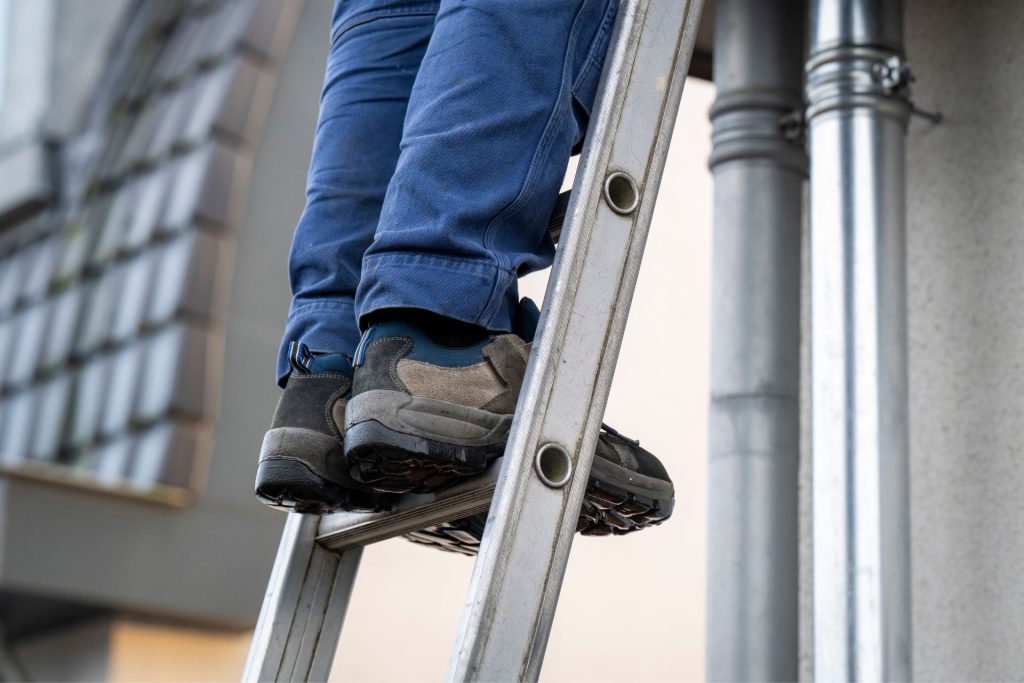
That matters because the jobs that seem most manageable aren’t necessarily the ones with the smallest consequences. A ladder, a roof edge, a heavy object or unfamiliar machinery can turn a routine weekend job into an injury before there’s been much time to reconsider.
Height is an obvious example. WorkSafe says more than half of the falls it has investigated were from less than three metres, with most of those falls involving ladders and roofs. It also makes clear that there’s no minimum height below which fall risks can simply be disregarded.
That makes the familiar Kiwi attitude of “she’ll be right” a poor safety system.
“Working at height cannot be treated as business-as-usual until something goes wrong. Businesses need to plan the work, involve workers, put the right controls in place, and make sure they stay in place for as long as the risk exists,” said Parani Wiki, WorkSafe area manager.
Wiki was commenting after an Auckland company was sentenced and fined for allowing workers to work at height while a prohibition notice was in place.
“A prohibition notice is issued because an inspector believes there is a serious risk to health and safety. It is not a suggestion, and it’s not something a business can ignore. In this case, workers could have been severely injured, or worse.”
None of this is an argument against having a go. Painting a room, assembling flat-pack furniture and general garden maintenance can remain perfectly reasonable weekend projects. The real question isn’t whether you’re capable of picking up a tool. It’s whether your competence extends as far as the job actually requires.
That’s the point where hiring a professional begins to make sense, and it has very little to do with simply paying for someone else’s labour.
A tradesperson with a proven track record brings judgement about the job itself, an understanding of the risks involved, the right equipment for the task, a sense of the correct sequence of work and an eye for a finish that will hold up over time. They’ve also had the opportunity to learn from jobs that didn’t go according to plan, something a first-time DIYer can’t easily replicate.
There’s another cost to getting it wrong. A job done poorly rarely stays a one-off expense. It may need to be redone properly, sometimes after damage has already been done to a property or person. The saving from doing it yourself can disappear quickly when the job has to be repaired by someone else.
The same principle applies to work where compliance or specialist knowledge is part of the job. Knowing when you need a qualified, experienced or otherwise appropriately competent person is part of making a good decision. WorkSafe’s guidance on working at height, for example, points to planning, training, supervision and the correct equipment as factors in preventing injuries.
There’s no prize for doing a job yourself if the only reason was avoiding the cost of calling someone who knows exactly what they’re doing. Sometimes the smartest DIY decision is to put the tools down, pick up the phone and pay someone else to do it once, and do it well.